
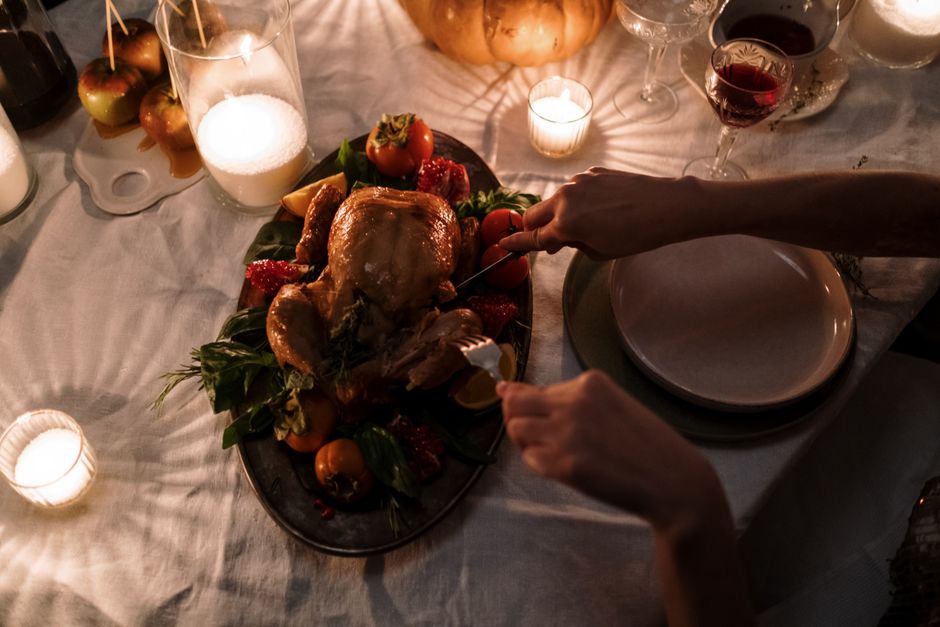
You wake up after a holiday dinner feeling stuffed, thirsty, and annoyed with yourself. The next thought is familiar: skip breakfast, eat very little today, and somehow make up for last night. That plan usually creates more hunger, more food thoughts, and another rushed meal later.
How to Eat During the Holidays Without Guilt
The best holiday eating plan is not a strict menu. It is a simple rhythm that lets you enjoy special foods while keeping enough structure to prevent the all-or-nothing swing. Eat regular meals, choose the foods you genuinely want, slow down for the first serving, and return to your normal routine at the next meal. One large dinner does not change your health, just as one salad does not repair it.
Use a three-part target: satisfaction, comfort, and recovery. Satisfaction means eating the holiday foods that matter to you instead of filling up on foods you only chose from habit. Comfort means stopping before the meal becomes physically painful. Recovery means drinking water, sleeping, and eating normally the following day. Balance is a pattern, not a punishment.
What Should You Eat Before a Holiday Meal?
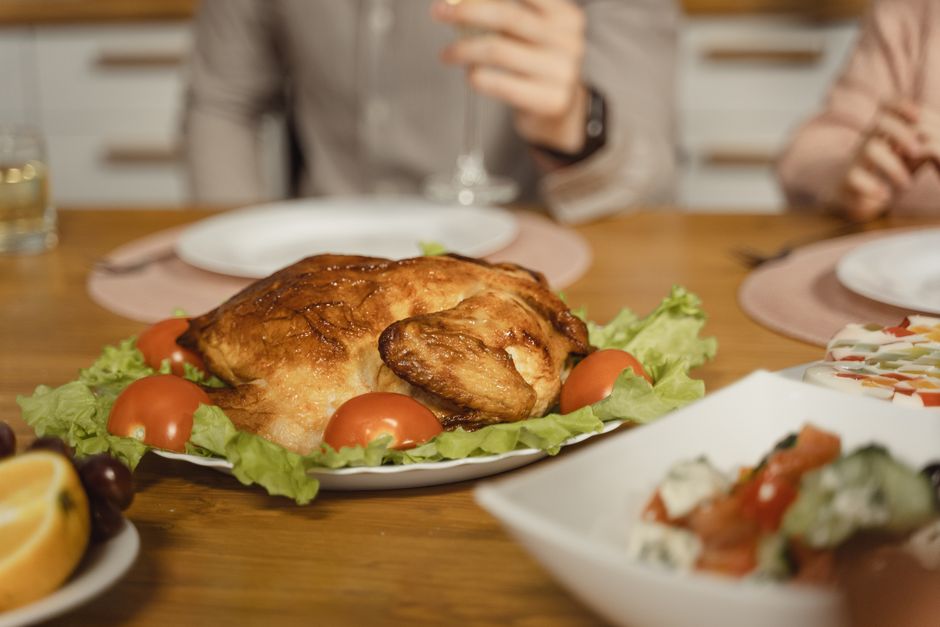
Should you skip breakfast or lunch to save calories?
No. Skipping meals tends to make the holiday meal feel urgent. By the time you sit down, normal hunger can become intense hunger, and intense hunger makes it harder to notice taste, fullness, and your own choices. You do not need a large breakfast or a heavy lunch, but you do need enough food to arrive steady.
A useful pre-event meal has protein, carbohydrate, produce, and some fat. For example, eat two eggs with whole-grain toast and fruit, or plain yogurt with oats, berries, and nuts. If you have only 10 minutes, combine a banana with cheese, a bean-filled wrap, or leftovers that include a clear protein source. The goal is not to eat as little as possible. The goal is to remove the desperate edge from the meal.
What should a pre-party meal look like?
Eat about two to four hours before the main event, depending on your usual schedule and appetite. A practical portion might include 20 to 30 grams of protein, one serving of carbohydrate, and one or two servings of fruit or vegetables. You do not need to count every gram. Use the meal to create a stable base.
| Time before the event | Useful choice | Reason |
|---|---|---|
| 3 to 4 hours | Full meal with protein, grains or potatoes, and vegetables | Leaves enough time for digestion while reducing extreme hunger |
| 1 to 2 hours | Yogurt and fruit, soup with beans, or a small sandwich | Provides fuel without feeling too heavy |
| Less than 1 hour | Fruit with nuts, milk, or a small cheese serving | Takes the edge off until the meal begins |
What if the meal starts late?
Plan a small snack instead of waiting several extra hours. A late meal creates a predictable failure point: you arrive ravenous, eat quickly, and keep eating because your body has not yet caught up with the food. A snack is not a lack of discipline. It is a practical response to a delayed schedule.
When you sit down, take a few breaths before serving yourself. Scan the table once. Choose the dishes you would feel disappointed to miss, then add foods that will make the plate more filling and comfortable, such as vegetables, beans, potatoes, rice, or a moderate portion of meat, fish, eggs, or another protein.
Holiday Plate Choices: Compare Your Options
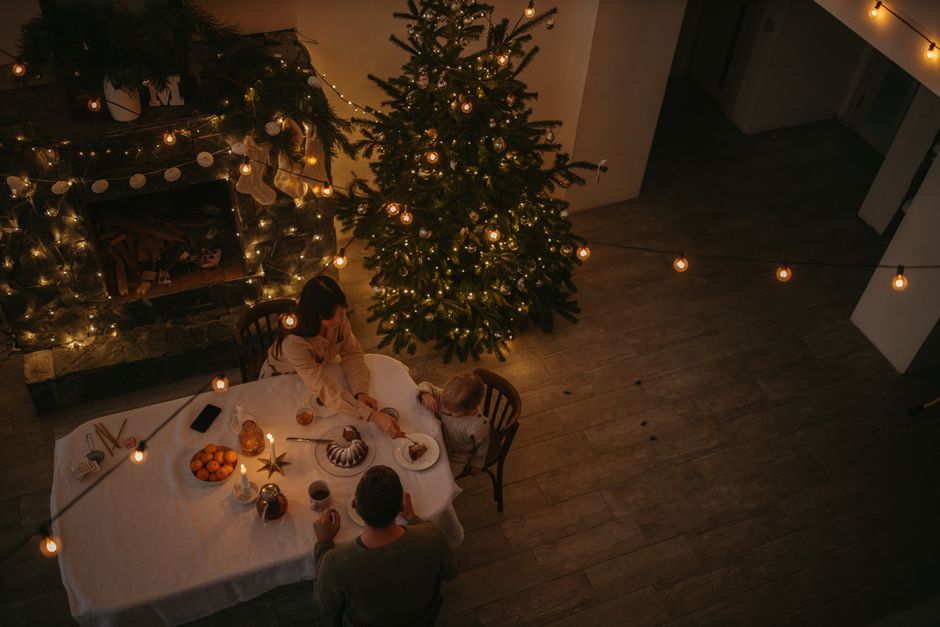
A holiday plate does not need to follow a perfect ratio. Still, comparing options can help when the table is crowded and every dish looks urgent. The strongest choice is the one that gives you pleasure and leaves you physically comfortable. No dish earns a moral label.
| Situation | Better first move | Why it works | Common mistake |
|---|---|---|---|
| You want several rich side dishes | Take a small serving of each favorite, then pause before seconds | You get variety without building a very large first plate | Taking only one food, then grazing for hours because the meal felt restrictive |
| You are unsure which dessert you want | Choose the dessert you would actively pick again tomorrow | A deliberate choice is more satisfying than sampling everything automatically | Eating several desserts quickly while still deciding |
| You are drinking alcohol | Alternate alcoholic drinks with water or another nonalcoholic drink | Slower drinking supports hydration and gives appetite cues more time to register | Drinking on an empty stomach |
| You are already full but food remains | Stop, clear your plate, and decide later if you are hungry | Food can wait; discomfort does not need to become the price of hospitality | Continuing because leaving food feels rude |
Which foods deserve space on the plate?
Start with the foods that carry tradition, memory, or real enjoyment. Then add one or two foods that support comfort. That might mean a spoonful of vegetables, a piece of fruit, a serving of beans, or a protein that keeps the meal satisfying. This approach works better than filling half the plate with foods you do not want simply to prove that you are being healthy.
When should you take seconds?
Wait 10 to 15 minutes if you can. Talk, help clear the table, or drink water. Then ask one direct question: am I still physically hungry, or do I want another taste? If you want another taste, take it. If you feel full but still want the food, take a small portion and eat it slowly. The point is awareness, not forced restraint.
A 24-Hour Holiday Balance Plan
- Start the morning normally. Eat breakfast within your usual routine. Include a food with protein and a food with carbohydrate, such as eggs with toast, yogurt with oats, or beans with a tortilla. Add fruit if that sounds appealing. Skipping breakfast to create room later usually makes the day harder.
- Drink steadily, not aggressively. Have water with meals and keep a drink nearby during travel. There is no need to force a large amount before eating. If alcohol is part of the celebration, decide your limit before the first drink and alternate with water or another nonalcoholic option.
- Eat a stabilizing meal before travel. If dinner is late, have a small meal or snack two to four hours beforehand. Choose something familiar and easy to digest. A sandwich, soup with beans, fruit with yogurt, or leftovers can prevent the arrival-at-the-table hunger surge.
- Choose your first plate on purpose. Walk past the food once before serving. Select the dishes that matter most, then add enough ordinary food to support fullness. A plate with only rich foods may taste good but leave you uncomfortable quickly. A plate with only vegetables may leave you searching for food later.
- Use a pause before seconds. Put your fork down occasionally and notice taste, hunger, and comfort. After the first plate, wait around 10 minutes when the setting allows it. Take more if you still want it. Stop when the food no longer improves the experience.
- Treat dessert as part of the meal. Pick a portion that lets you taste it fully. Sit down to eat it instead of eating scraps while clearing dishes. If you want two desserts, take smaller portions of both and slow down enough to decide which one you actually prefer.
- Return to normal the next morning. Eat when you are hungry, but do not delay food as punishment. Choose a normal breakfast, take an easy walk if you enjoy movement, and avoid weighing yourself for a verdict about the celebration. Your routine is the recovery plan.
The holiday season becomes easier when balance stops meaning perfect control. You can enjoy food, notice your body, respond to hunger, and move on from a large meal without turning it into a week-long argument with yourself. That flexible skill remains useful long after the decorations come down.
Medical Disclaimer: This content is for informational purposes only and does not constitute medical advice. Always consult a qualified healthcare professional before making health-related decisions.