
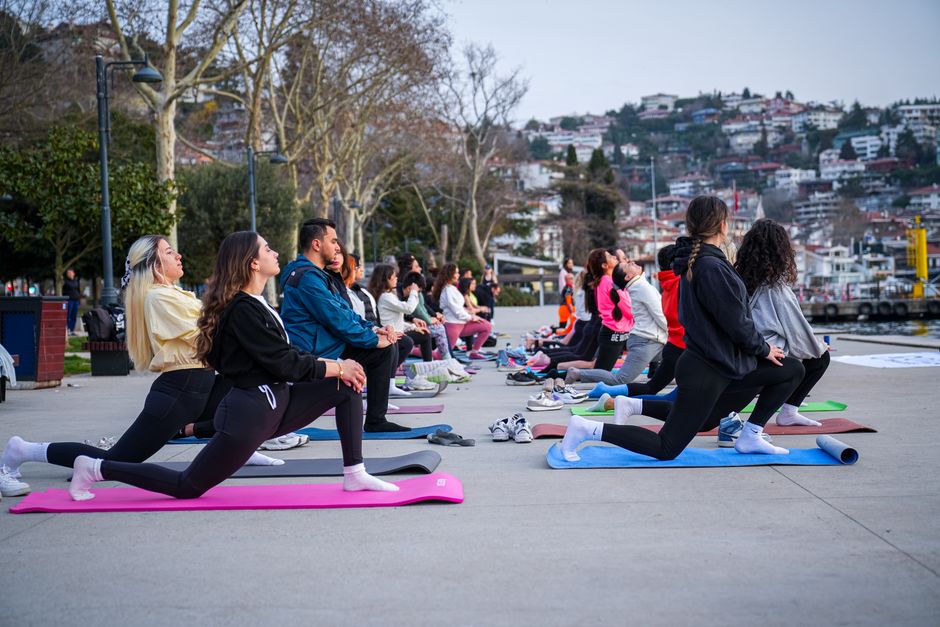
Picture this: your lower back has been bothering you for weeks, a colleague keeps mentioning yoga, and you’ve finally decided to try it — without paying for a studio or app subscription. You search online, find dozens of conflicting recommendations, and close the tab twenty minutes later having signed up for nothing. That loop is common. It doesn’t have to happen to you.
High-quality free yoga instruction for absolute beginners is widely available online. The challenge is knowing which resources are genuinely useful and how to structure a practice that builds over time. This is not medical advice — if you have existing injuries, joint conditions, or recent surgical history, consult a qualified healthcare provider before beginning any new physical practice.
The Best Free Platforms for Beginner Yoga Online
Not all free yoga is equal. Several major platforms restrict their best content behind paid tiers. Others offer unlimited free access that genuinely competes with anything behind a paywall. Here’s how the main options compare:
| Platform | Free Content Volume | Best For | Key Limitation |
|---|---|---|---|
| Yoga with Adriene (YouTube) | 900+ videos, fully free | Absolute beginners, home practice | YouTube ads, no live instruction |
| DoYogaWithMe.com | 500+ HD videos free | Structured courses, multiple teachers | Some advanced content paywalled |
| SaraBethYoga (YouTube) | 400+ videos, fully free | Gentle yoga, beginners with stiffness | Less structured than Adriene’s library |
| Boho Beautiful (YouTube) | 300+ videos, fully free | Flow-style yoga, visual learners | Faster pace than most beginners need |
| Down Dog App | Free trial only, then $9.99/month | Customized session generation | Not free long-term |
Yoga with Adriene: The Standard Starting Point
Adriene Mishler’s channel has over 12 million subscribers and a 30-session beginner series called “30 Days of Yoga” that has become the default entry point for online beginners. The series is entirely free, requires no equipment beyond a mat, and progresses logically — foundational poses first, short flows by week three. Her separate “Foundations of Yoga” playlist covers individual poses in 5–15 minute segments, explaining alignment cues clearly enough that most beginners can self-correct without a teacher present. The library is large enough that you’re unlikely to need anything else for the first four to six months.
DoYogaWithMe: Best Structured Free Course
DoYogaWithMe.com offers multi-week beginner courses, including “Beginner Series 1” taught by David Procyshyn — a 10-session Hatha yoga curriculum with classes running 20–40 minutes each. Video quality is high-definition. The sequencing is more deliberate than most YouTube playlists, which typically means better progression for people who want curriculum rather than standalone sessions. Fiji McIntyre’s classes on the same platform take a slightly different instructional approach and are worth exploring after completing the beginner series. This is generally the stronger choice for people who find YouTube’s unstructured format frustrating.
What You Actually Need to Start
A yoga mat and roughly 6 feet of clear floor space. That’s the honest answer.
The Gaiam Essentials Thick Yoga Mat ($25, 6mm) handles everything a beginner needs. Lululemon’s The Mat 5mm ($88) performs noticeably better — better grip, longer durability — but the difference doesn’t matter in month one. If you have no mat at all, a folded blanket works for floor-based and seated poses, though it won’t provide the stability needed in standing sequences like Warrior II. Bare feet are standard practice. No specialized clothing required — anything allowing a full range of movement works fine, though tight jeans will make hip-opening poses difficult.
One point worth flagging: avoid practicing on carpet if possible. Carpet compresses unevenly and reduces stability in standing sequences. This is a minor issue for lying-down work but creates real balance problems in Warrior poses and Triangle Pose. A mat on a hard floor is the more reliable setup from the start.
A 4-Week Free Yoga Schedule That Builds Progressively
The fastest way to stall a beginner practice is daily sessions in week one. Yoga engages muscle groups most people haven’t used this way — hip flexors, spinal extensors, shoulder stabilizers — and delayed onset soreness typically peaks at 24–48 hours. Practicing through that every day tends to produce poor form as compensation, not faster adaptation. Most experienced teachers recommend three sessions per week for the first two weeks, not seven.
This schedule works with either Yoga with Adriene’s “30 Days of Yoga” or DoYogaWithMe’s Beginner Series 1:
| Week | Sessions/Week | Session Length | Primary Focus |
|---|---|---|---|
| Week 1 | 3 | 20–25 min | Mountain Pose, Downward Dog, Child’s Pose, Cat-Cow |
| Week 2 | 3–4 | 25–30 min | Warrior I, Warrior II, Tree Pose, standing balance |
| Week 3 | 4 | 30–40 min | Sun Salutation A broken into parts, short linked sequences |
| Week 4 | 4–5 | 35–45 min | Continuous Vinyasa flow, first full-length beginner class |
Session Structure: What Each Practice Should Include
Every session needs three phases. First, a 5-minute warm-up — Cat-Cow, gentle neck rolls, and supine spinal twists prepare the spine and signal the nervous system that deliberate movement is starting. Second, the main practice. Third, Savasana, the final resting pose. New practitioners frequently skip it because it looks unproductive. Research in somatic practice generally supports its role in integrating the session’s physical work. Adriene’s classes always include Savasana. Don’t cut it.
Distinguishing Normal Sensation from Pain That Warrants Stopping
Yoga traditions broadly distinguish between “sensation” — the pull of a stretch, mild muscle fatigue, the intensity of a held pose — and “pain,” particularly sharp or acute sensations in joints. The former is expected. The latter means stop the pose immediately. Beginners most commonly encounter this in the knees during Pigeon Pose, the lower back during deep backbends, and the wrists during Plank and Chaturanga. Modifying with props or backing out of a pose is correct technique, not failure.
Five Mistakes That Consistently Stall Beginner Progress
- Clicking past beginner-labeled content. Many people search for beginner yoga and then select an intermediate flow because it looks more interesting. Intermediate Vinyasa assumes you can hold Plank for 30 seconds without lower back collapse, transition through Chaturanga with full control, and follow rapid verbal cuing. Most beginners cannot. The result is compensated movement patterns that typically take months to correct once established.
- Measuring progress by flexibility alone. Meaningful flexibility gains in standing forward folds typically appear around the 8–12 week mark with consistent practice — not at week two. Comparing your range of motion to an instructor who has practiced for a decade produces discouragement, not insight. Progress is more accurately tracked by how steadily you hold a pose or follow a sequence without losing breath control.
- Refusing to use props. Yoga blocks cost roughly $10–15 for a foam pair. They bring the floor closer in forward folds and support the hips in seated poses. Beginners who avoid blocks because they feel like cheating typically use worse alignment throughout entire sessions. A block under the hand in Triangle Pose produces better spinal extension than straining toward the floor with a rounded back. Props are correct practice for bodies at this stage.
- Practicing on a full stomach. Standard guidance across most yoga traditions recommends waiting 2–3 hours after a full meal. Twisting poses — Revolved Triangle, Seated Spinal Twist, Revolved Chair Pose — can produce real discomfort when the digestive system is active. Early morning practice before breakfast eliminates this issue entirely.
- Choosing a style without understanding the options. Hatha yoga is slow, hold-based, and appropriate for most beginners. Vinyasa links breath to movement in continuous flow — manageable at beginner level but more demanding. Yin yoga involves 3–5 minute passive holds targeting connective tissue, which makes it inappropriate for beginners with joint hypermobility. The free platforms above default to Hatha and gentle Vinyasa for beginner tracks. That’s appropriate for this stage.
When Free Online Yoga Is Not the Right Starting Point
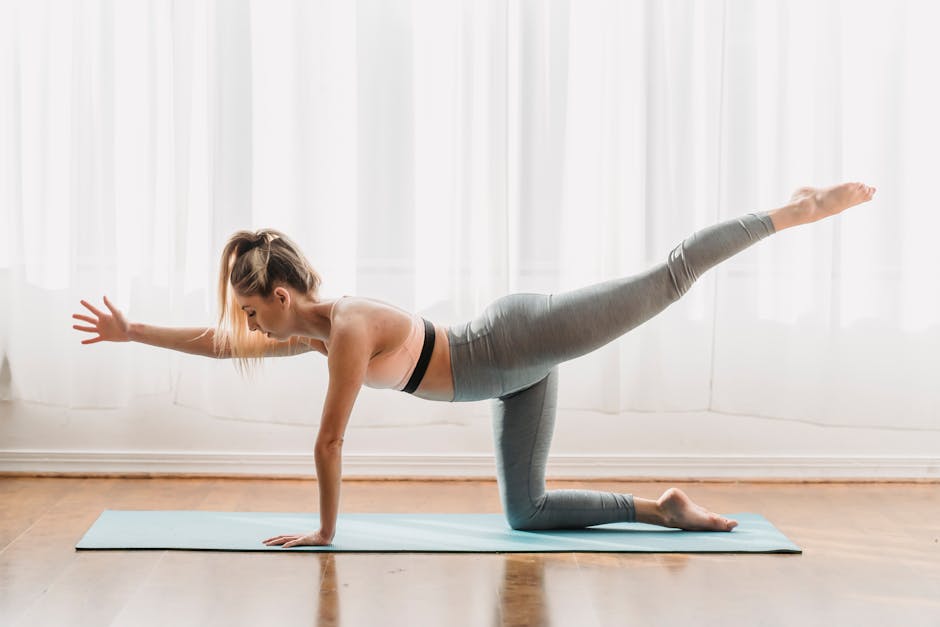
Free online yoga is not appropriate for everyone. Being direct about this matters.
If you’re recovering from a back injury, recent surgery, or managing a diagnosed musculoskeletal condition like scoliosis, degenerative disc disease, or hypermobile Ehlers-Danlos syndrome, generic beginner yoga videos — even high-quality free ones — cannot provide the individualized modification guidance your situation requires. A few sessions with a certified yoga therapist holding the C-IAYT credential (which requires 800 hours of specialized training beyond a standard 200-hour teacher certification) will typically do more for your situation than months of self-directed online practice. This is not medical advice; confirm with your physician before beginning any practice with physical rehabilitation implications.
For healthy beginners who want more structure than YouTube provides, the paid platforms worth knowing are Alo Moves at $20/month — exceptionally high production quality, strong beginner tracks taught by teachers like Dylan Werner and Briohny Smyth — and Gaia at $12/month, which offers a larger library with a more spiritually oriented focus, including Kundalini and meditation content alongside asana. Down Dog App at $9.99/month generates algorithmically customized sessions and suits people who want variety without curating their own playlist from scratch.
For most healthy adults who want to start yoga without spending money, Yoga with Adriene’s “30 Days of Yoga” series remains the clearest starting point in 2026. Follow the 4-week progressive schedule above, use blocks from day one, and assess where you are at the 30-day mark before deciding whether a paid platform adds anything meaningful to your practice.
Medical Disclaimer: This content is for informational purposes only and does not constitute medical advice. Always consult a qualified healthcare professional before making health-related decisions.