
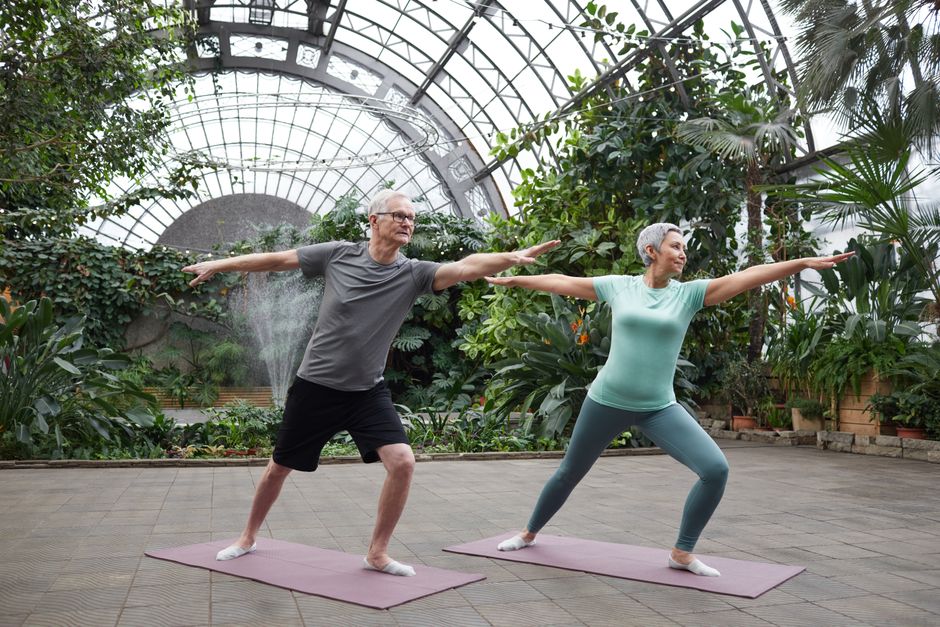
How do you stay active when the sun sets before dinner and the cold makes the sofa feel like the only sensible place to be? The answer is not a heroic two-hour workout. It is a short indoor routine that removes travel, weather, and decision-making from the evening.
This plan uses simple movements, a clear weekly rhythm, and a few optional tools. You can complete it in a bedroom, living room, or narrow hallway. The goal is to raise your heart rate, maintain strength, and protect your energy during the months when outdoor exercise feels harder to start.
How to build a 30-minute indoor workout
Use this five-part sequence
- Minutes 0-4: warm up. March in place, circle your shoulders, reach overhead, and perform slow bodyweight squats. Keep the pace easy enough to speak in full sentences.
- Minutes 4-12: raise your heart rate. Alternate 40 seconds of brisk marching, step-ups, or low-impact jumping jacks with 20 seconds of easy movement. Complete eight rounds.
- Minutes 12-22: build strength. Perform 10 squats, 8 incline push-ups against a sturdy table, 10 reverse lunges, and a 20-second plank. Repeat the circuit twice.
- Minutes 22-27: train balance and control. Stand on one leg for 20 seconds per side, then perform slow hip hinges and calf raises.
- Minutes 27-30: cool down. Walk slowly, breathe through your nose if comfortable, and stretch the muscles that feel tight.
Adjust the effort without guessing
Use a simple effort scale from one to ten. The warm-up should feel like a three. The cardio block should reach six or seven, where you can speak short sentences but would not want to give a speech. Strength work should feel challenging near the final repetitions while your form stays controlled.
If you have joint pain, replace jumping with marching. If balance feels poor, hold the back of a chair. Stop for chest pain, faintness, unusual shortness of breath, or sharp pain. People with a heart condition, recent injury, or major health concern should ask a qualified clinician how to modify exercise safely.
Which weekly schedule works best?
A simple winter rhythm
Do not make every evening a hard training day. A mixed schedule gives your muscles time to recover and keeps the routine from becoming another source of stress. The table below gives enough movement to build fitness without requiring a full home gym.
| Day | Session | Time | Main purpose |
|---|---|---|---|
| Monday | Strength circuit | 30 minutes | Legs, pushing, core |
| Tuesday | Easy indoor walk and mobility | 20 minutes | Recovery and circulation |
| Wednesday | Intervals using marching or steps | 25 minutes | Cardio fitness |
| Thursday | Rest or gentle stretching | 10 minutes | Muscle recovery |
| Friday | Full-body circuit | 30 minutes | Strength and conditioning |
| Saturday | Longer walk, dance, or cycling session | 35-45 minutes | Enjoyment and endurance |
| Sunday | Rest | None | Reset for the week |
Why this schedule is realistic
Only three sessions require focused effort. The Tuesday and Saturday options can feel less formal, which matters when winter fatigue is high. A missed Wednesday does not ruin the week; move the interval session to Saturday and keep one full rest day.
Best choice: Start with three planned workouts, not seven. Add time only after the schedule feels ordinary for two weeks.
How to make a small room safe for exercise
Clear the floor before the timer starts
A safe workout area needs less space than most people think, but it needs clear space. Measure a rectangle about two metres long and one metre wide. Remove loose rugs, pet toys, charging cables, and low stools. Leave enough room to extend both arms without striking a lamp or shelf. If you use a chair for balance or incline push-ups, test that it does not slide when you press into it.
Lighting matters on dark evenings. Use a bright overhead light or a lamp aimed at the floor, not directly into your eyes. Wear shoes with a stable sole for step-ups and lateral movements. Bare feet can work for controlled yoga or mobility, but they offer less protection during faster circuits.
Warm up the body, not the room
Cold muscles often feel stiff at the start, so spend the first four minutes moving gradually. Begin with ankle rolls, shoulder circles, easy marching, and shallow squats. Do not start with fast jumps or deep lunges. Increase range and pace in stages. This approach takes less time than recovering from a strained calf.
Keep water nearby, but do not treat heavy sweating as proof of a good workout. A comfortable room and breathable layers are enough. If you feel dizzy, unusually weak, or chilled despite moving, stop and reassess. Indoor exercise still needs normal safety rules, especially in poorly ventilated rooms or spaces with heaters close to curtains and furniture.
For apartment dwellers, choose quiet moves after 9 p.m. Marching, slow squats, wall push-ups, and resistance-band rows create far less noise than burpees or repeated jumps. The quiet option is the better option if it lets you train without disturbing other people or worrying about the floor.
Which home fitness tools are actually useful?
Buy the tool that removes your biggest barrier
You do not need equipment to follow this plan. A mat and a stable chair cover most movements. If walking is the habit you miss most, the WalkingPad C2 Foldable Walking Treadmill is the strongest upgrade for a small home. The manufacturer lists a 1-4 mph speed range, 220-pound capacity, 32.5-by-20.4-by-5.4-inch footprint, 55-pound net weight, and a current listed price of $449. It suits walking and easy intervals, not serious running.
For floor work, the Manduka PRO Yoga Mat 6mm costs $144 on the manufacturer site and measures 71 inches long in the standard version. Its dense cushioning and lifetime guarantee make it a durable pick for planks, mobility, and strength circuits. It is heavy, so the lighter Manduka PRO Lite is the better choice if you carry your mat outside the home.
Know when a recovery gadget is unnecessary
The Theragun Mini 3rd Generation has a listed price of $179.99 on the current Therabody store page and includes three attachments in a compact design. It may feel useful after a long week, but it does not replace a warm-up, strength progression, sleep, or medical care. For most beginners, the mat offers more value because it helps every session.
Verdict: Buy the WalkingPad C2 if cold streets are the main obstacle to walking. Buy the Manduka PRO if floor comfort limits your workouts. Skip the massage gun unless recovery is already organized and you want an optional extra.
What common winter workout mistakes should you avoid?

“I will make up for missed days”
Trying to repay a missed workout with a punishing session usually creates soreness, poor sleep, or another missed day. Resume with the next planned workout and reduce the volume by one round. The aim is to protect the habit, not punish the calendar.
“More sweat means more progress”
A hot room and thick clothing can make a light workout feel extreme. Sweat measures cooling, not fitness gains. Use effort, breathing, and movement quality to judge the session. Keep the room comfortable and drink when thirsty.
“A machine will solve motivation”
A treadmill, bike, or massage tool can remove a practical barrier, but it cannot create a schedule. If you rarely use a walking machine at home, do not buy one before testing a two-week routine with free walking videos, marching, or a simple timer. Rent, borrow, or choose a smaller tool when storage and budget are tight.
Also avoid fast movements on slippery floors, exercising through sharp pain, and copying advanced videos without checking the instructor’s modifications. For people new to training, controlled repetitions are more useful than impressive-looking exercises.
Best correction: Make the workout easier to start before making it harder to complete.
How do you keep the routine going until spring?
Use a visible start cue
Choose one trigger that happens most evenings: the end of your final work call, the start of a television program, or brushing your teeth after dinner. Put your mat beside that cue. Write the exact session on a paper calendar. “Exercise tonight” is vague; “25-minute intervals at 7:30” gives the brain a clear action.
Track attendance before performance
For the first month, record whether you started, not how many calories you burned or how fast you moved. Mark a session complete after ten minutes if the day turns difficult. That small rule prevents an all-or-nothing mindset and keeps one disrupted evening from becoming a lost week.
Refresh the routine every two weeks by changing one detail: use music instead of a video, swap marching for step-ups, or turn Saturday into a dance session. Keep the warm-up and schedule familiar while adding small changes for interest. If your energy remains low for several weeks, review sleep, food, stress, and possible health issues instead of simply adding more exercise.
The winter goal is not to become a different person before the weather improves. It is to maintain a dependable relationship with movement when conditions are inconvenient. As home fitness tools become smaller, quieter, and easier to store, the most useful trend will be simple: workouts designed to fit real evenings, not ideal ones.
Always consult a qualified healthcare professional before making health-related decisions.