
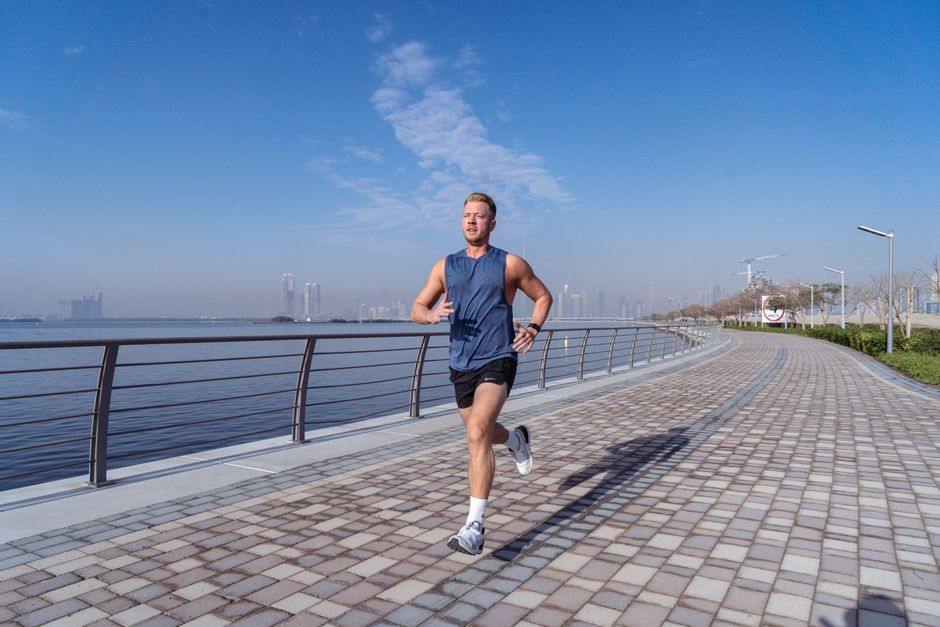
The safest outdoor summer workout is shorter, slower, and timed around the heat. Move hard sessions to early morning or evening, drink before thirst appears, and stop at the first sign of weakness, dizziness, confusion, or nausea. Heat changes the cost of exercise, so a pace that feels easy in April can become unsafe in July.
You do not need to abandon running, cycling, hiking, or outdoor strength work. You need a plan that accounts for air temperature, humidity, sun exposure, workout intensity, hydration, clothing, and your own health history. The clear rule is simple: protect body cooling first, then chase fitness gains.
Why heat makes familiar workouts harder
Your body has two jobs during exercise: supply working muscles with blood and move heat from your core to the skin. On a hot day, the cardiovascular system has to handle both tasks at once. More blood moves toward the skin for cooling, while the muscles still demand oxygen. Your heart rate can climb even when your speed stays the same.
Sweat cools the body only when it evaporates. High humidity slows evaporation, so a humid 80°F day may feel more stressful than a dry 90°F day. Direct sunlight, dark pavement, little wind, and tight clothing add more heat. Dehydration makes the problem worse because lower blood volume leaves less fluid available for sweating and circulation. The CDC heat guidance for athletes advises people to pace activity, choose cooler hours, drink more water than usual, and stop if they feel faint or weak.
Heat index matters more than the thermometer alone
Check the heat index or a local heat-risk forecast before you leave. Temperature and humidity work together, so the number on a weather app may understate the strain. Air-quality alerts matter too. Ozone and wildfire smoke can make outdoor exercise a poor choice even when the temperature looks manageable, especially for people with asthma or other lung conditions.
Fitness does not equal heat immunity
A trained runner can still develop heat illness. Fitness may help you maintain a pace, but it does not cancel humidity, dehydration, medication effects, sleep loss, infection, or sudden exposure to high temperatures. New heat requires gradual adjustment. Treat the first hot week as a separate training phase, not as a test of toughness.
How to build a heat-safe outdoor workout
Start with less work than you think you can handle. The following structure works for running, cycling, hiking, and outdoor circuits:
- Check the forecast. Review the heat index, humidity, air quality, wind, and storm risk. Cancel the session if local health authorities advise people to stay indoors.
- Choose a short route. Pick a loop near shade, bathrooms, water, and a place with air conditioning. Avoid routes that leave you several miles from help.
- Warm up gradually. Spend 5 to 10 minutes walking or moving easily. Do not begin with sprints, heavy hill work, or a dense circuit.
- Cut intensity first. Reduce speed, weight, hill grade, or work intervals. A useful starting point is 20% to 30% less hard work than your cool-weather session.
- Schedule cooling breaks. Walk in shade for two to five minutes every 15 to 20 minutes during a hot session. Do this before you feel desperate for a break.
- Use the talk test. You should be able to speak in short sentences during moderate work. If speech becomes difficult, lower the effort immediately.
- Finish early when signals change. Dizziness, unusual weakness, headache, nausea, chills, confusion, or poor coordination ends the workout. Move to a cool place and ask for help.
Heat acclimatization also needs a gradual ramp. For the first several hot sessions, keep the duration and intensity modest. Add time only after you finish without unusual fatigue, headache, cramps, or a prolonged elevated heart rate. New runners, people returning after illness, and anyone training in a much hotter climate should take several days to adjust rather than copying their old plan.
How much should you drink during summer exercise?
Hydration advice fails when it gives one rigid number to every athlete. Sweat rates vary with body size, pace, clothing, temperature, humidity, and genetics. Water usually works for a short, easy workout. Longer sessions with heavy sweating may require sodium and carbohydrates as well. Drinking far beyond thirst can also create a dangerous sodium dilution, so more is not always safer.
| Workout situation | Practical starting approach | What to watch |
|---|---|---|
| Under 45 minutes, easy effort | Drink normally beforehand; water may be enough | Dry mouth, headache, rising effort, or unusual fatigue |
| 45 to 90 minutes in heat | Carry water and take small, regular drinks; use electrolytes if you sweat heavily | Muscle cramps, dizziness, nausea, or a sharp drop in pace |
| More than 90 minutes or repeated hard efforts | Plan fluids, sodium, carbohydrates, shade, and refill points | Confusion, vomiting, worsening weakness, or inability to continue |
| Heart, kidney, or blood-pressure condition | Use a clinician-approved fluid and sodium plan | Swelling, shortness of breath, faintness, or sudden changes in urination |
Estimate your sweat rate when sessions run long
For a personal estimate, weigh yourself without wet clothing before and after a workout, record what you drank, and account for bathroom breaks. Losing 1 pound equals roughly 16 ounces of fluid. This estimate can guide future training, but it does not replace medical advice. Avoid trying to replace every ounce during the workout, and never force fluids when you feel bloated or nauseated.
Choose electrolytes for a reason
Electrolyte drinks make the most sense during prolonged, sweaty sessions or when you finish with salt marks on clothing. They do not make a dangerous workout safe. People with kidney disease, heart failure, high blood pressure, or a prescribed fluid restriction should ask a clinician before adding large amounts of sodium or fluid. The CDC Yellow Book heat guidance also recognizes that medical conditions and some medicines can reduce heat tolerance.
Which gear helps in the heat?
My clear gear verdict: buy carrying capacity and sun protection before buying technology. A water bottle, light clothing, sunscreen, and a route with shade do more for safety than a watch full of training metrics. Products can support a good plan, but no device can reliably tell you that it is safe to continue through dizziness or confusion.
Useful examples for different workouts
- Garmin Forerunner 55: Its listed price has been $199.99, with up to 20 hours of GPS battery life. It can help runners track time, heart rate, and pace, but use effort and symptoms ahead of the screen.
- Nathan QuickSqueeze 22-ounce handheld: At about $35, it suits short runs where a bottle is enough and a vest feels excessive. It is the best pick for a 30- to 60-minute route with refill access.
- Osprey Duro 1.5: This running vest carries two soft flasks and has a listed price around $110 in the United States. Choose it for long trail runs or remote routes; skip it for a short neighborhood jog because extra layers and weight can increase discomfort.
- Buff CoolNet UV+ neckwear: Usually priced around $25, it provides lightweight sun coverage and can be dampened for brief cooling. It should not replace shade, breaks, or sunscreen.
The best purchase for a beginner is the item that solves a real route problem. If you have water every mile, a handheld may be enough. If you cannot refill for two hours, a vest earns its weight. If a watch makes you chase pace in dangerous heat, leave it at home.
When should you move the workout indoors?
Move indoors when the heat index is extreme, air quality is poor, storms are approaching, or you cannot create a route with shade, water, and a quick exit. Also choose an indoor session if you have a fever, stomach illness, poor sleep after travel, or a new medication that may affect sweating, blood pressure, or fluid balance.
Who needs extra caution?
People with heart disease, kidney disease, diabetes, lung disease, high blood pressure, or a history of heat illness need an individualized plan. Older adults, young people, pregnant athletes, and anyone taking medicines that affect sweating or hydration may also face higher risk. A clinician can help set safe limits. Do not copy a professional athlete’s heat protocol or use a friend’s electrolyte plan as your own.
Common mistakes that turn training into risk
- Starting at the normal cool-weather pace because the workout feels easy for the first ten minutes.
- Waiting until severe thirst before drinking.
- Using a dark cotton shirt that stays wet and traps heat.
- Training alone on a remote route during an extreme-heat alert.
- Taking pain medicine to hide a headache and continuing the session.
- Assuming sweat proves that the body is cooling effectively in high humidity.
- Trying to replace a missed workout with a longer, harder session the next day.
Outdoor summer workouts build fitness only when the body can recover from them. The single most important takeaway is to slow down, cool down, and stop early whenever the heat changes how you feel.
Always consult a qualified healthcare professional before making health-related decisions.