
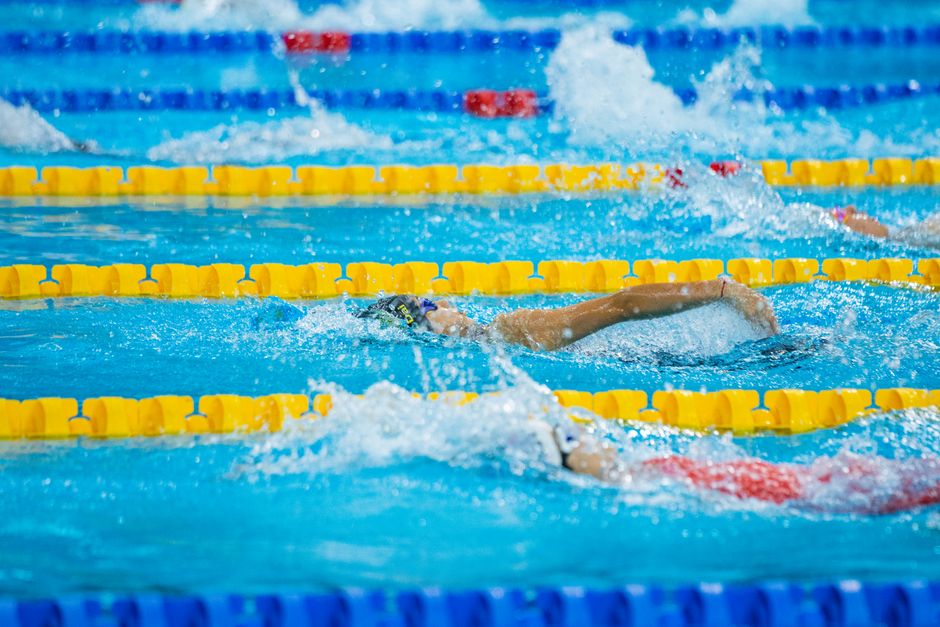
Water is roughly 800 times denser than air. That is why a calm 25-yard swim can leave a new swimmer breathing harder than a brisk walk. The resistance is useful, but only when you manage it. A beginner who swims too fast, rests too little, or tries to copy an advanced workout often quits before stamina has time to grow. This swimming for fitness beginner plan uses short repeats, controlled rest, and three pool sessions each week. It also explains which gear helps, which gear is optional, and how to tell if your conditioning is improving.
What should a four-week beginner swim plan include?
A useful plan has four parts: easy swimming to raise your temperature, drills to improve movement, intervals to train stamina, and a cool-down to bring your breathing down. The order matters. Starting with fast lengths makes technique collapse before the useful work begins.
Follow this session structure
- Warm up for 5 to 8 minutes. Swim slowly with any stroke you can perform comfortably. Stop for 20 seconds if your breathing feels rushed.
- Practice one skill for 5 minutes. Try side kicking, relaxed exhalation underwater, or six gentle strokes followed by a pause. Pick only one skill per session.
- Complete the main set. Start with 8 x 25 yards in week one. Move to 6 x 50 yards in week two. By week four, try 4 x 100 yards with steady effort.
- Rest with purpose. Stand or hold the wall. Take slow breaths. Begin the next repeat when you can speak a short sentence.
- Cool down for 5 minutes. Swim slowly until your breathing feels normal. Do not turn the final length into a sprint.
How to progress without guessing
Change one training variable at a time. Add two repeats, extend each repeat from 25 to 50 yards, or trim rest by five seconds. Never make all three changes together. Record total distance, the number of repeats, and how difficult the session felt on a scale from 1 to 10. If the same workout drops from an 8 to a 6 after two or three weeks, your stamina has improved even if your lap time has not.
For the first month, judge success by calm breathing and consistent form. Speed can come later. The swimmer who finishes 600 controlled yards will gain more than the swimmer who sprints 100 yards and spends the rest of the session gasping at the wall.
How do you pace swim intervals without gasping?
My strongest recommendation is to slow down before you shorten the rest. Most beginners start at a pace they can hold for one length, then call the workout difficult when they cannot repeat it. That trains survival. It does not build reliable stamina.
Use the talk test between repeats
After each repeat, ask whether you could say, “I am ready for the next length.” If you cannot speak that sentence, rest for another 15 to 30 seconds or swim the next repeat more slowly. This simple check works because it keeps the session near a sustainable aerobic effort. Your breathing should be noticeable but controlled. You should not feel dizzy, sharp chest pain, or unusual pressure. Stop and seek medical advice for those symptoms.
Match rest to the distance
For 25-yard repeats, begin with 20 to 30 seconds of rest. For 50-yard repeats, use 25 to 40 seconds. For 100-yard repeats, use 40 to 60 seconds while your conditioning is new. These are starting ranges, not tests. If you need more rest to keep your stroke steady, take it. The goal is repeat quality: similar pace, similar body position, and similar breathing from the first repeat to the last.
Try this pacing ladder during week three: swim 50 yards easy, rest 30 seconds; swim 50 yards steady, rest 30 seconds; swim 50 yards easy, rest 30 seconds; then repeat the sequence three more times. The alternating pace teaches control without demanding a hard sprint. Over time, keep the distance the same and reduce rest by five seconds. That change gives you a clear measure of progress.
Which swim gear actually helps a beginner?
Buy comfort before gadgets. A good pair of goggles and a suit that stays in place will improve training more than a watch that records data you do not understand.
Best basic gear for regular pool sessions
The Speedo Biofuse 2.0 goggles cost about $35 from Speedo and use a soft frame, anti-fog treatment, UV protection, and a push-button adjustment system. They are the best pick here for a beginner who dislikes leaking or pressure around the eyes. Fit matters more than the logo: press the goggles gently to your face without using the strap. They should stay sealed for a moment.
The TYR Durafast Elite swimsuit costs about $79 for the women’s Cutoutfit model and uses a 92% polyester, 8% spandex fabric designed for frequent chlorine exposure. TYR lists the fabric for more than 300 hours of performance use. It is a smart choice for someone swimming two or three times weekly because it resists the fast stretching that ruins cheaper fashion suits.
Gear that can wait
A pull buoy, fins, paddles, and a kickboard can help with technique, but none is required for the first month. Buy them only after you can complete the basic plan without losing form. The Garmin Swim 2 is useful for data-focused swimmers because it tracks distance, pace, stroke count, and SWOLF, with up to seven days of smartwatch battery life. Its original suggested retail price was $249.99. It is not the best first purchase for someone who still needs to learn a relaxed exhale. Use a simple pool clock until your training habit is stable.
Gear verdict: spend first on goggles that do not leak and a chlorine-resistant suit; add a watch only when recorded data will change how you train.
What mistakes stop beginners from gaining swim stamina?
Most stalled progress comes from a few fixable habits. The largest mistake is treating every session like a fitness test. Stamina grows from repeated work, not from one dramatic effort.
Why am I exhausted after one length?
You are probably swimming too fast, holding your breath, or lifting your head to breathe. Slow down until your arms feel almost lazy. Exhale into the water instead of waiting until your lungs feel full. Turn your body to breathe rather than lifting your face forward. If you still cannot recover after several easy repeats, use shorter distances such as 12.5 yards or take a coached beginner lesson.
Why is my distance increasing but my form getting worse?
You increased volume before your technique was ready. A collapsing elbow, scissor kick, or sinking hip adds drag and makes every extra yard expensive. Cut the next session by 25 percent. Practice one drill, then return to short repeats. Do not use hand paddles to hide weak form; paddles increase resistance and can irritate the shoulders when your stroke is not stable.
When should you stop a workout?
Stop for sharp pain, dizziness, faintness, chest pressure, unusual shortness of breath, or loss of coordination. Muscle effort is normal. Warning signs are not. Beginners with heart, lung, shoulder, or balance conditions should ask a clinician how to start safely. The safest plan is the one you can repeat next week.
When should you buy a swim watch instead of using the pool clock?
If you are still learning to breathe, glide, and pace, do not buy a swim watch yet. The pool clock gives you all the information needed for the first four weeks: distance, rest, and total time. A watch becomes worthwhile when you train alone, lose count often, or want to compare pace and stroke count across several weeks.
Choose a watch for a specific training problem
Buy the Garmin Swim 2 if you want automatic lap counting, stroke data, and structured records for pool sessions. Choose a basic digital timer or the pool clock if your main problem is starting too fast. A smartphone cannot replace either option in the water, and a heart-rate number will not fix poor breathing rhythm. Data is useful only when it leads to a clear adjustment, such as adding 10 seconds of rest or slowing the first repeat.
When should you choose another exercise?
Swimming is not the best tool for every goal. If you cannot access a pool at least twice weekly, brisk walking, cycling, or rowing may build cardio fitness more consistently. If shoulder pain appears with each stroke, choose walking or a stationary bike while you get assessed. If you want maximum strength or bone-loading exercise, add resistance training because swimming alone provides limited impact.
For a healthy beginner with regular pool access, the best purchase is still a scheduled lane session, not a gadget. Start with three calm workouts, eight short repeats, and enough rest to keep your breathing under control. Water will still feel dense on the first day. By the end of four weeks, you should cross the same pool with less panic, cleaner strokes, and enough energy to turn around and do it again.
Always consult a qualified healthcare professional before making health-related decisions.