

You close the laptop at 10:30 p.m., climb into bed, and suddenly remember every awkward conversation, unpaid bill, and unfinished task from the day. Your body is tired, but your mind is still at work. A calmer evening routine fixes that handoff instead of asking you to force sleep.
Why your evening routine keeps your mind awake
The problem is usually not a lack of discipline. Your brain has learned that nighttime is the first quiet moment available for planning, worrying, scrolling, and solving problems. If the day stays loud until bedtime, your nervous system does not receive a clear signal that the workday has ended.
Your brain needs an ending, not more advice
Sleep improves when the same small actions happen in the same order. This creates a reliable cue: dishes are done, messages are paused, tomorrow has a plan, and the bed is for rest. The routine does not need to feel luxurious. It needs to be boring enough to repeat.
Start with a fixed wind-down point, not a fixed sleep time. Set it 45 to 60 minutes before bed. At that point, stop demanding useful work from yourself. Dim the room, put the phone outside arm’s reach, and move unfinished thoughts onto paper.
Separate tiredness from worry
Make two short lists. The first contains tomorrow’s tasks, each with one next action. The second contains worries you cannot solve tonight. Write “review Friday at 9 a.m.” beside those worries. That line tells your brain the problem has not been ignored; it has been scheduled.
Then lower stimulation. Bright overhead lighting, heated arguments, work email, and fast social feeds all keep attention pointed outward. A quiet routine works because it reduces decisions and emotional spikes before bed. Do this for seven nights before judging it. One restless night proves nothing.
Use this 45-minute routine in the same order
A good routine is a sequence you can follow when you are already tired. The order matters more than the style. Keep the total cost at zero for the first week.
Minutes 45 to 30: close the day
- 45 minutes before bed: finish food preparation, lock doors, and set the next morning’s alarm.
- 40 minutes before bed: write tomorrow’s three priorities and one worry you will revisit later.
- 35 minutes before bed: wash your face, brush your teeth, and change into sleep clothes.
- 30 minutes before bed: switch off work notifications and charge your phone outside the bed area.
Minutes 30 to 0: lower the signal
- 30 minutes before bed: turn off bright ceiling lights and use one warm, low lamp.
- 20 minutes before bed: read a paper book, stretch gently, or listen to quiet audio.
- 10 minutes before bed: take six slow breaths, with the exhale longer than the inhale.
- At bedtime: enter bed only when sleepy. If you stay awake and frustrated, leave the bed for a quiet activity and return when drowsy.
Do not add a ten-step skincare ritual, an hour of meditation, and a strict sleep journal on night one. That turns rest into another performance review. The winning routine is the one you can repeat on a bad Tuesday.
Change light, screens, and sound in this order
People often attack the phone first and ignore the room. That is backwards. The strongest evening setup removes the biggest source of stimulation, then makes the bedroom easier to tolerate.
The practical priority list
| Change | Target | Cost | Why it comes first |
|---|---|---|---|
| Overhead lighting | Switch off 45 minutes before bed | $0 | Reduces glare and signals the day is ending |
| Phone location | Charge it 6 to 10 feet away | $0 | Adds friction before late scrolling |
| Room temperature | About 60 to 67°F | $0 to $5 | A cooler room helps the body release heat |
| Background sound | Low, steady, and below conversation level | $0 | Covers sudden traffic or household noise |
| Clock checking | Turn the display away | $0 | Stops time-watching from becoming a threat |
Why a screen ban often fails
“No screens” sounds clear but collapses when you use your phone for an alarm, medication reminder, or contact with family. Use a narrower rule: no work, arguments, shopping, news, or infinite feeds during the final 30 minutes. A calm audiobook or a downloaded sleep track is a different activity from opening an app that keeps serving new content.
Keep sound low enough that you can hear your own breathing. If the room is already quiet, buying a sound machine solves nothing. The best first move is free: remove the unpredictable noise and dim the room.
Sleep products help only after the routine works
My verdict: buy a sleep product only when it removes a specific obstacle. A lamp can fix a harsh room. A sleep app can provide a script when your mind is racing. Neither can repair a bedtime that changes by three hours every night.
Three products with a clear job
The Hatch Restore 3, listed around $169.99, combines a sunrise alarm, adjustable wind-down lighting, and sleep sounds. It is the best choice for someone who keeps checking a phone because the device puts the alarm and routine in one place. Skip it if your phone already stays outside the bedroom and noise is not a problem.
The Lumie Bodyclock Shine 300, commonly priced near $129.95, offers a 30-minute sunrise and sunset sequence, adjustable light, and built-in sounds. It is my pick for dark winter mornings or anyone who wakes to a harsh alarm. It is not a treatment for insomnia, and a sunrise lamp will not replace a consistent wake time.
Calm Premium has offered annual access around $79.99, with guided meditations and Sleep Stories. It makes sense for a person who needs spoken guidance to stop planning at night. Check the renewal terms before starting a trial. If you already relax with free audio or a paper book, the subscription adds a bill rather than a solution.
The buying mistake to avoid
Do not buy three products at once. You will not know which change helped, and you may turn bedtime into a setup project. Test one tool for 14 nights while keeping the rest of the routine stable. The best product for your sleep is the one that removes a real barrier and disappears into the background.
What to do when the routine is not enough
What if I lie awake after doing everything right?
Leave the bed if frustration starts climbing. Sit somewhere dim and do something dull: read a few pages, fold laundry, or listen to familiar audio. Return when sleepiness comes back. This teaches your brain that the bed is not a place for two-hour arguments with the clock.
What if I wake during the night?
Do not check the time unless safety requires it. Keep lights low, avoid the phone, and use the same quiet activity. If you are hungry, choose a small snack rather than a heavy meal. Repeated waking can come from alcohol, late caffeine, pain, reflux, medication effects, noise, or an untreated sleep condition, so a routine cannot explain every case.
When should I stop experimenting alone?
Talk with a clinician if poor sleep happens at least three nights a week for three months, your daytime function drops, or you snore loudly, gasp, wake with headaches, or feel dangerously sleepy while driving. Ask about cognitive behavioral therapy for insomnia, often called CBT-I. It uses structured changes to sleep timing, habits, and anxious thinking. Do not treat persistent distress as a shopping problem.
Also get support when nighttime worry links to panic, depression, trauma, or thoughts of self-harm. A lamp and breathing exercise are useful tools, not emergency care. If you feel unsafe, contact local emergency services or a crisis service now.
Give the routine seven nights before judging it
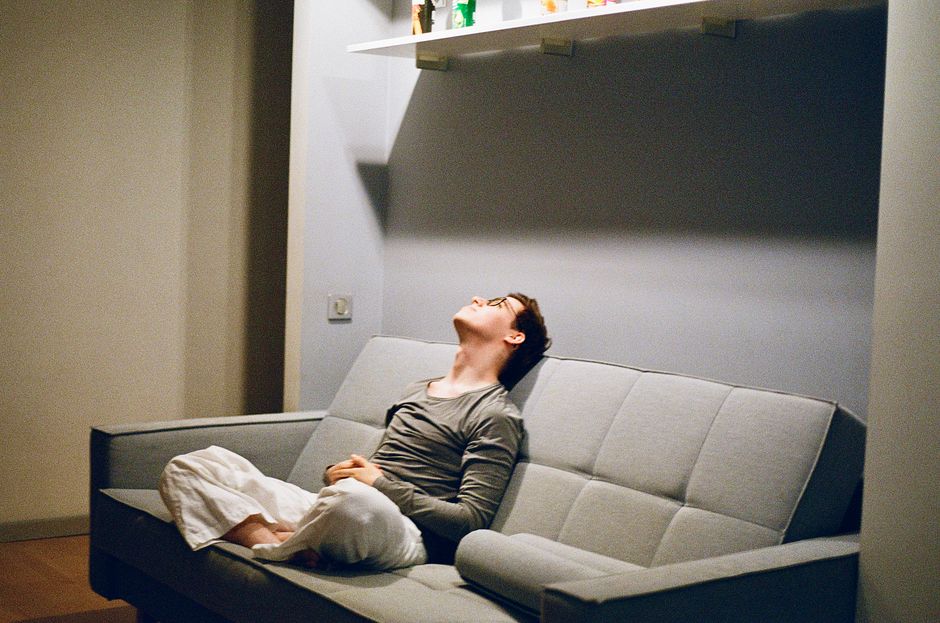
For a busy, wired sleeper, the best plan is simple: choose a 45-minute wind-down, park the phone away from bed, dim the room, and repeat the same order for seven nights. Do not chase perfect sleep data. Score only three things each morning: how long it took to settle, how often you woke, and how steady your energy felt by lunch. If one part clearly helps, keep it; if a product adds effort without removing a problem, return to the free routine.
Tonight, you can close the laptop, write tomorrow’s first task, switch off the ceiling light, and leave the phone across the room. The unfinished conversation and unpaid bill may still exist in the morning, but they no longer have to run the final hour of your day. That is the calmer evening you were trying to create when you climbed into bed awake.
Always consult a qualified healthcare professional before making health-related decisions.