

Cold mornings make a sweet pastry tempting, but it rarely keeps hunger quiet for long. The better move is a warm or make-ahead breakfast built around oats, fruit, seeds and enough fluid to make the fibre comfortable to eat.
Why fibre matters more in a winter breakfast
My clear view: a high-fibre breakfast works best when it slows the meal down without making it feel like punishment. Fibre adds bulk, supports regular bowel movements and helps a bowl of food stay satisfying after the first burst of sweetness fades. It cannot turn a poor breakfast into a health product, though. A bowl loaded with syrup and oversized portions can still be high in calories while offering little useful balance.
Soluble and insoluble fibre do different jobs
Oats, chia seeds and ground linseeds supply soluble fibre that absorbs water and creates a softer texture. Apples, pears, berries and their skins bring a mix of fibre types. The practical target is not a perfect ratio. It is a breakfast with roughly 8 to 12 grams of fibre, some protein and enough liquid to prevent a dry, dense mouthful.
Warm food is useful, not magical
Heat does not make fibre stronger, and winter weather does not change the basic nutrition of oats. Warm porridge simply makes it easier to eat a substantial portion slowly. That matters when cold mornings reduce your appetite or when a rushed breakfast normally turns into a mid-morning snack hunt. Add cinnamon for flavour, not because it cancels out sugar.
Start with 40 to 60 grams of dry oats, one piece of fruit or 100 grams of berries, and one fibre-rich extra such as chia, linseeds or chopped nuts. That structure beats a decorative bowl with six toppings and no clear portion.
How to build porridge that stays filling
The reliable formula is simple: oats, liquid, one fibre booster, fruit and a modest source of fat or protein. The mistake is treating toppings as the main meal. If the base is only a small handful of oats, even an attractive pile of berries will not carry much energy through the morning.
A dependable 10-minute method
- Measure 50g of rolled oats into a saucepan. Add 200ml of milk or unsweetened fortified plant drink plus 100ml of water.
- Stir in 10g of chia or one tablespoon of ground linseeds. Use less if you are new to high-fibre meals.
- Bring the mixture to a gentle simmer. Cook for 5 to 7 minutes, stirring twice, until the oats soften and the liquid thickens.
- Add a chopped pear, apple or 100g of frozen berries. Frozen berries can go in during the last two minutes.
- Finish with 100g of plain yoghurt, 15g of walnuts or one tablespoon of peanut butter. Choose one or two, not all three, if you want to keep the portion moderate.
Mistakes that ruin the bowl
Do not add a large dry spoonful of chia after cooking and eat the porridge immediately. The seeds need fluid. Do not replace the fruit with several tablespoons of honey. That changes the breakfast from gently sweet to sugar-heavy without adding much fibre. A watery bowl also needs fixing before you serve it: simmer it longer, or add a small amount of oats and wait two minutes.
For the best everyday version, use rolled oats, pear, chia and plain yoghurt. It has enough sweetness, chew and creaminess to feel like breakfast rather than a bowl of warm paste.
How to make overnight oats without a soggy result
Overnight oats should be soft but still have some bite. The dependable ratio is one part oats to roughly two parts liquid, with a smaller amount of yoghurt or chia for body. Too much liquid produces thin porridge. Too much chia produces a cold gel that feels heavy.
What liquid works best?
Milk gives the most protein and a creamy finish. Unsweetened soy drink is useful when you want a plant-based option with more protein. Oatly Original Oatmilk in a 1-litre carton works for a mild oat flavour, but it should not be treated as a fibre source; check the label because many oat drinks contain little fibre per glass. For extra creaminess, add 100g of plain Greek yoghurt, such as the common 907g Chobani tub format.
Which oats and add-ins hold their texture?
Standard rolled oats are the safest starting point. Quaker Old Fashioned Oats in a common 42-ounce tub, Bob’s Red Mill Extra Thick Rolled Oats in a 32-ounce bag, and Flahavan’s Organic Jumbo Oats in a 1-kilogram bag all illustrate the texture difference: thicker flakes usually stay chewier, while quick oats soften faster. Use 50g oats, 150ml liquid, 100g yoghurt, one tablespoon of chia and half an apple.
How should you prepare the jar?
Mix the oats, liquid, yoghurt and chia before adding fruit. Chill for at least six hours. Add nuts in the morning so they stay crisp, and add extra liquid one tablespoon at a time if the mixture is too firm. The best overnight oats are assembled the night before but adjusted at breakfast, not swallowed blindly because a recipe gave one fixed ratio.
Bottom Line: for the most reliable overnight oats, choose rolled oats, a measured 150ml of liquid and fruit added in two stages. That prevents both soup and paste.
Baked fruit fixes the sweetness problem
Baked fruit is the best choice when you want a winter breakfast that feels like comfort food without relying on a pastry. The oven softens apples, pears and plums, concentrates their natural sweetness and creates a warm texture that pairs well with oats. The catch is portion control: fruit plus oats plus syrup plus crumble topping can become a dessert-sized meal very quickly.
A balanced baked-fruit template
- Use one medium apple or pear, around 150 to 180g, cored and chopped.
- Add 40g rolled oats, 15g chopped walnuts and half a teaspoon of cinnamon.
- Pour over 60ml of water or milk so the oats soften instead of drying out.
- Bake at 180°C for 25 to 30 minutes until the fruit is soft and the oats are lightly browned.
- Serve with 100g plain yoghurt or a spoonful of cottage cheese for protein.
When baked fruit is the wrong choice
Skip it when you need breakfast in five minutes, when you are cooking for one person with no leftovers, or when soft high-fibre meals already upset your digestion. It also fails as a make-ahead option if you seal it while piping hot; trapped steam turns the oat topping wet. Let it cool for 15 minutes before storing it, then reheat until hot.
Use a pear when you want a softer, sweeter result and an apple when you want more sharpness and structure. Leave the skin on if it is clean and your digestion handles it. The skin adds fibre, but there is no prize for forcing it when it causes discomfort.
Bottom Line: baked fruit earns its place on slower mornings, but porridge is the better default for speed, portion control and repeatability.
How to increase fibre without upsetting your stomach
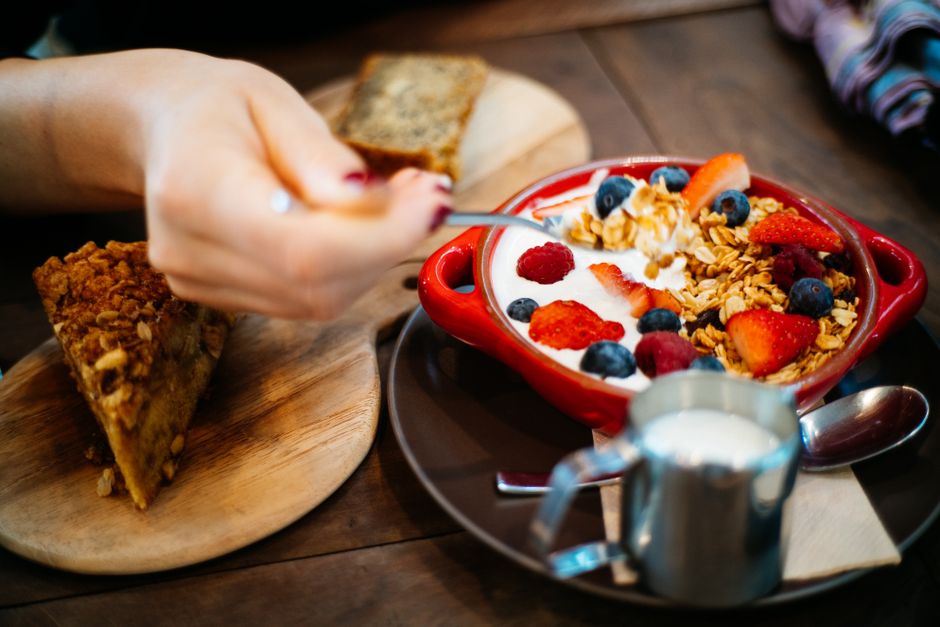
A high-fibre breakfast should improve the rest of the day, not create an emergency before lunch. The most common failure is increasing oats, chia, berries and bran at the same time while drinking no extra fluid. The ingredients are not automatically wrong; the jump is too large.
What is a sensible starting point?
If your current breakfast is low in fibre, begin with 40g oats, one piece of fruit and one teaspoon of chia. Hold that amount for several days. Increase the seeds or oats only after your body handles the first version comfortably. Many adults are advised to work towards roughly 25 to 30g of fibre across the full day, but breakfast does not need to provide half of it.
How much fluid is enough?
Use at least 250 to 300ml of liquid in a cooked bowl when adding chia or linseeds, and drink normally across the morning. Fibre pulls in water as it moves through the digestive system. A dry breakfast plus low fluid can mean bloating or constipation, which makes the meal feel like a failure even when the ingredients are nutritious.
What if oats or fruit cause symptoms?
Reduce the portion and test one ingredient at a time. Cooked fruit may feel easier than raw fruit for some people. A person managing irritable bowel syndrome, coeliac disease, diabetes or a diagnosed digestive condition should use advice matched to that condition rather than copying a generic fibre target. This is not financial advice; APR ranges and fee amounts have no place in a food decision, so the useful figures here are grams, millilitres and minutes.
The strongest winter routine is not the most elaborate one. It is a breakfast you can repeat: oats for structure, fruit for flavour, a measured fibre booster and enough liquid. As more ready-made breakfast foods compete on health claims, simple recipes with transparent portions will remain easier to judge than products that hide the useful numbers behind packaging.
Always consult a qualified healthcare professional before making health-related decisions.