
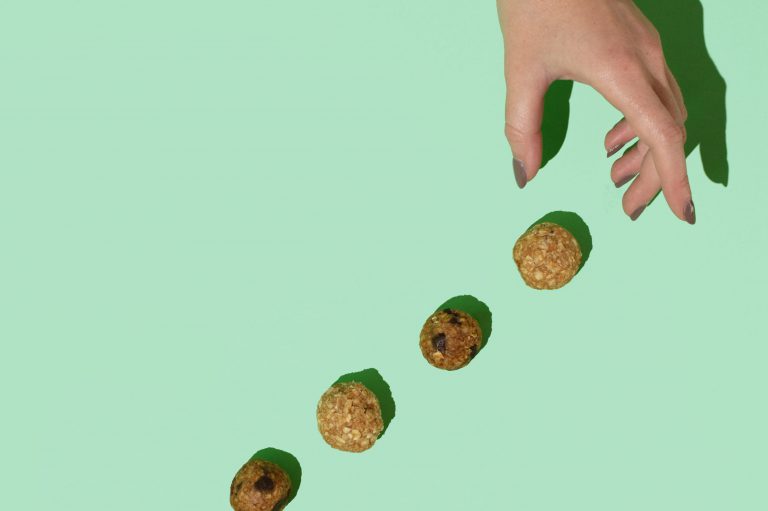
Picture this: you spend twenty minutes mixing, rolling, and refrigerating a batch of cookie dough energy balls — then you bite into one and it tastes like a granola bar that lost the will to live. The texture is dry, the supposed cookie dough flavor is absent, and three of them crumbled before they made it to the container.
That outcome is almost always a ratio problem. Or a skipped step. Or, in a surprising number of cases, a food safety issue that most recipe blogs don’t mention at all.
This guide explains the safety concern, the ingredient ratios that actually produce a dough-like texture, and the specific substitutions that hold up versus the ones that consistently disappoint.
This is not nutritional or medical advice — consult a registered dietitian or licensed healthcare provider before making significant changes to your dietary routine.
Why Raw Flour in Energy Balls Is a Real Safety Issue
Most cookie dough energy ball recipes include raw oats or oat flour with no heat treatment — and food safety authorities typically flag that as a risk worth addressing.
Raw grain is an agricultural product. It can carry pathogens, including E. coli O157:H7, which survives on dry surfaces and doesn’t require moisture to remain viable. The FDA has linked multiple illness outbreaks to raw flour — a 2016 outbreak tied to uncooked Gold Medal All-Purpose Flour sickened at least 63 people across 24 states. Oats carry a lower baseline risk than wheat flour, but they are not sterile, and current food safety guidance does not generally treat them as ready-to-eat without some form of treatment.
The fix is straightforward and takes five minutes. Spread your oats on a dry baking sheet and toast at 350°F for 5–7 minutes, or microwave in 30-second intervals until they reach an internal temperature of 165°F. Let them cool completely — at least 10 to 15 minutes — before mixing. Warm oats will melt your chocolate chips and change the dough consistency in ways that are hard to correct after the fact.
Bob’s Red Mill Extra Thick Rolled Oats ($6.49 for 32 oz) hold up well through heat treatment without becoming mushy. Bob’s Red Mill Oat Flour ($5.99 for 22 oz) is the pre-ground alternative for a smoother, more uniform texture — heat-treat it exactly the same way, spreading it thin on a baking sheet.
This step is routinely skipped in recipe content because it adds time and inconvenience. Skipping it means accepting a risk that food safety professionals would generally advise against, particularly for children, pregnant individuals, and anyone immunocompromised.
The Ingredient Breakdown: What Every Component Actually Does
Understanding each ingredient’s structural role is what separates a batch that holds together from one that collapses at the seam. Substituting without knowing the function is how most batches go sideways.
The Binder: Nut Butter
Nut butter is the structural glue. It binds the dry ingredients, contributes the majority of the fat content, and determines whether the balls roll cleanly or crumble in your hands. The ratio that works across virtually every base recipe is ½ cup of nut butter per 1 cup of oats. Go below that and the mixture won’t cohese. Go above it and the balls won’t firm up — even after two hours in the freezer.
Consistency matters more than brand. You need nut butter that’s runny at room temperature. Justin’s Classic Almond Butter ($12.99 for 16 oz) typically comes out of the jar at the right viscosity. Smucker’s Natural Peanut Butter ($4.49 for 16 oz) works equally well at less than half the price — stir the separated oil back in completely before measuring. Do not use no-stir varieties. Jif Natural, Peter Pan Natural, and similar no-stir formulations use added palm oil to prevent separation, and that changes how the binder behaves under refrigeration. The result is typically greasy rather than firm.
For nut-free batches, SunButter Natural Sunflower Butter ($8.99 for 16 oz) is the most reliable swap — its fat content and viscosity are close enough to peanut butter that the ratio holds. Tahini is commonly suggested online, but it runs significantly thinner and requires an additional 2–3 tablespoons of oats per batch to compensate.
The Sweetener: Honey vs. Medjool Dates
Honey is the default choice in most recipes. It adds sweetness and a small amount of binding, but it also makes the dough sticky and difficult to roll without a full chill period. Two to three tablespoons per batch is sufficient — beyond that the balls won’t set properly. Raw honey works fine; there’s no meaningful functional difference between raw and processed honey in this application.
Bard Valley Medjool Dates ($9.99 per pound at Costco, Whole Foods, and most natural grocery retailers) are the better structural choice. Process 6–8 pitted dates in a food processor until they form a smooth paste, then fold it into the dry mix. Date-based dough holds its shape better at room temperature, produces a chewier texture, and is noticeably closer to actual cookie dough in mouthfeel. Nutritionally, research generally treats date sugars and honey sugars similarly in terms of glycemic response — neither is a low-sugar option, and anyone managing blood glucose should account for both the same way.
The Chocolate: Why Chip Size Matters Here
Standard semi-sweet chips — Nestlé Toll House ($3.49 for 12 oz) being the most common — are large enough to create structural weak points in a 1-tablespoon ball. When you bite down, the chip can cleave the ball at a seam. Enjoy Life Mini Chocolate Chips ($7.99 for 10 oz) distribute more evenly through the dough and are the clearest choice for allergen-sensitive households — they’re certified free of all 14 major allergens. Use ¼ cup per batch. More than that and rolling becomes difficult.
Step-by-Step Instructions for a Batch That Holds Together
This produces approximately 18–20 balls using a 1-tablespoon scoop. Total active time is roughly 20 minutes, plus 30 minutes of chilling. Do not try to shortcut the chill step.
- Heat-treat the oats. Spread 1½ cups of Bob’s Red Mill Extra Thick Rolled Oats on a dry, ungreased baking sheet. Bake at 350°F for 5–7 minutes until lightly toasted. Let cool completely — 10 to 15 minutes minimum.
- Mix the wet ingredients. In a medium bowl, combine ½ cup nut butter, 3 tablespoons raw honey (or the blended paste from 6–8 pitted Medjool dates), and 1 teaspoon Frontier Co-op Pure Vanilla Extract ($8.99 for 4 oz). Stir until uniform.
- Add the dry ingredients. Fold in the cooled oats and ¼ cup Enjoy Life Mini Chocolate Chips. Optional additions that work well: 1 tablespoon ground flaxseed meal, 1 tablespoon chia seeds, or 1–2 tablespoons of Orgain Organic Protein Powder in Vanilla Bean ($29.99 for 2 lbs) if protein content is a priority.
- Chill the dough. Cover the bowl with plastic wrap or a lid and refrigerate for 30 minutes. If you used honey, this step is not optional — the dough is too sticky to roll at room temperature and the balls won’t hold their shape.
- Roll the balls. Scoop approximately 1 tablespoon of dough per ball. Roll firmly between your palms with steady pressure. If the dough cracks or crumbles, the nut butter ratio is likely off. Add ½ tablespoon of nut butter, re-mix, and try again.
- Set in the freezer. Arrange rolled balls on a parchment-lined baking sheet and freeze for 20–25 minutes before transferring to an airtight container. Refrigerate for up to two weeks or freeze for up to three months.
Nutrition Per Ball: What You’re Actually Getting
The figures below are based on the base recipe using Smucker’s Natural Peanut Butter, raw honey, Bob’s Red Mill Extra Thick Rolled Oats, and Enjoy Life Mini Chips — no protein powder added. Each ball is approximately 1 tablespoon of dough, or roughly 28 grams.
| Nutrient | Per Ball (~28g) | Per 2-Ball Serving (~56g) |
|---|---|---|
| Calories | ~85 kcal | ~170 kcal |
| Total Fat | 4.5g | 9g |
| Saturated Fat | 1g | 2g |
| Total Carbohydrates | 9g | 18g |
| Dietary Fiber | 1.2g | 2.4g |
| Total Sugars | 4g | 8g |
| Protein | 2.5g | 5g |
| Sodium | 30mg | 60mg |
Two balls as a snack sits at roughly 170 calories — comparable to a small banana with a tablespoon of peanut butter. The sugar content is modest by packaged snack standards, but these are not a low-glycemic food. Oats and honey both raise blood glucose, and nutrition research typically recommends pairing carbohydrate-dense snacks with protein and fat, which the nut butter here partially provides.
It’s worth comparing the homemade version against commercial options. RxBar Cookie Dough Protein Bars ($2.99 each) deliver 12g of protein per bar at 210 calories. Kind Protein Cookie Dough Bars ($2.49 each) offer 12g of protein at 250 calories. If protein per serving is your primary goal, commercial bars typically outperform a homemade batch without protein powder. Where homemade wins: ingredient control, no added emulsifiers or fillers, and a cost per ball of roughly $0.30–0.45 depending on brand choices.
Adding 2 tablespoons of Orgain protein powder to the full batch increases each ball’s protein content by approximately 1.5g at 10–12 additional calories per ball — a meaningful improvement if you’re making these specifically as a post-workout snack.
The One Mistake That Ruins Most Batches
Not chilling the dough.
Every recipe lists it. Most people skip it, attempt to roll warm sticky dough, produce uneven lumps, and conclude the recipe is flawed. It isn’t. Thirty minutes in the refrigerator is the minimum for honey-based dough. An hour produces cleaner results. Set a timer and step away — the dough will wait.
Variations That Hold Up — and Some That Don’t
Can I use quick oats instead of old-fashioned rolled oats?
Technically yes. Expect a noticeably different texture. Quick oats absorb moisture faster and create a denser, mushier center — less chewy, more compact, and less convincing as a cookie dough stand-in. Bob’s Red Mill Extra Thick Rolled Oats produce the best result here because the thicker cut retains some bite after heat treatment and refrigeration. If quick oats are your only option, reduce the nut butter by about 1 tablespoon to compensate for the faster absorption rate.
Is there a version that holds up outside the fridge?
Using Medjool date paste instead of honey gives you a firmer ball that holds together reasonably well at room temperature for a few hours — useful for gym bags or packed lunches. Honey-based balls will soften and lose their shape within 30–45 minutes outside refrigeration. For any situation where cold storage isn’t available, dates are the correct sweetener choice. That’s a clear recommendation, not a hedge.
Can I add protein powder without wrecking the texture?
With strict limits. Add 1–2 tablespoons maximum per batch and use a powder that performs cleanly in no-bake applications. Orgain Organic Protein Vanilla Bean and NOW Sports Pea Protein ($29.99 for 2 lbs) both mix without chalky residue. Avoid collagen peptides — they dissolve without adding structure, contribute no detectable flavor benefit, and don’t improve the protein-per-calorie ratio enough to justify the cost. If you exceed 2 tablespoons of powder, add ½ tablespoon of extra nut butter per additional tablespoon of powder to prevent the dough from drying out.
What add-in is most worth using regularly?
Ground flaxseed meal — 1 tablespoon per batch. It blends invisibly into the dough, adds approximately 2g of dietary fiber per full batch, and slightly improves texture by absorbing excess moisture from the nut butter. Bob’s Red Mill Golden Flaxseed Meal ($6.49 for 32 oz) is widely available and costs almost nothing on a per-batch basis. It doesn’t change the flavor, doesn’t require a ratio adjustment, and is the single easiest way to improve the nutritional profile of the base recipe without making anything more complicated.
Medical Disclaimer: This content is for informational purposes only and does not constitute medical advice. Always consult a qualified healthcare professional before making health-related decisions.