
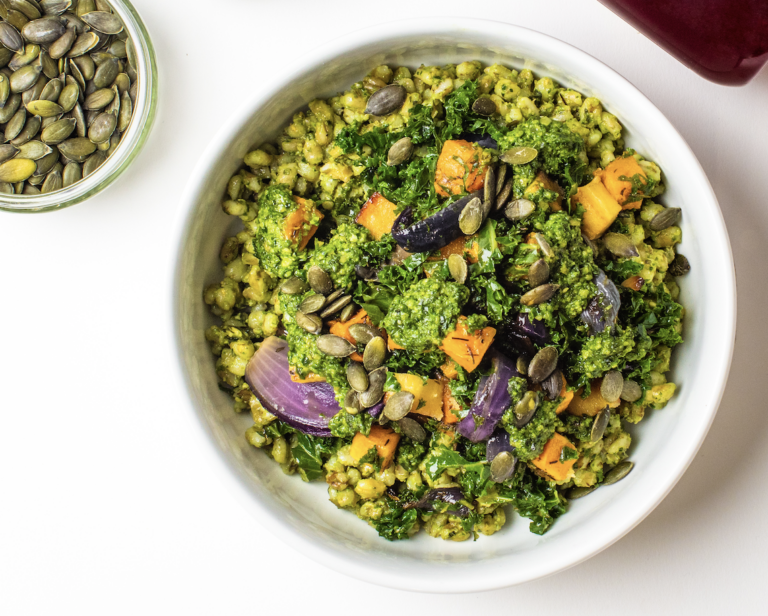
Skip the $14 cafe version. This bowl costs under $4.50 to make at home, lands at 519–589 calories with 13–19g of protein, and takes 40 minutes including roasting time. Here’s exactly how to build it without ending up with mushy squash and grain that tastes like nothing.
Why This Flavor Combination Actually Works
Most grain bowl recipes are just vegetables on grain with a drizzle of something. This one is different because the three core components — pesto, butternut squash, and grain — each do something distinct and complementary rather than just stacking on top of each other.
Butternut squash brings sweetness and body. When roasted properly at 425°F for 20–25 minutes, cut to 3/4-inch cubes, it caramelizes on the edges and stays firm inside. That natural sweetness is what makes pesto work here. Pesto is fatty, savory, and sharp from garlic and Parmesan. Sweet plus savory fat is one of the most reliable flavor combinations in cooking — the same reason you put honey on a cheese plate. These two ingredients don’t compete. They sharpen each other.
The grain is the neutral carrier. It absorbs pesto without fighting it, and gives the squash something to rest against texturally. A bowl that’s all pesto and squash with no grain base is just a side dish.
Nutritionally, this combination covers real bases. Butternut squash delivers about 82 calories per cup cooked, 2g of fiber, and roughly 457% of your daily vitamin A. Pesto runs 80–100 calories per tablespoon depending on the brand, with most of that coming from olive oil and pine nuts. The grain handles protein and sustained energy. Together, you have a meal that keeps most people full for 4–5 hours without relying on a massive calorie load to do it.
Health content tends to oversell this kind of bowl — “anti-inflammatory superfoods,” “gut-healing properties,” the usual. Basil and olive oil do have documented anti-inflammatory compounds. That’s real. But the more honest version is simpler: the macros are solid, the flavors are good, and it doesn’t require following a specific diet protocol.
One thing worth flagging: the calorie count shifts significantly based on pesto volume. Two tablespoons is the right amount. Three tablespoons adds roughly 90–100 extra calories that you won’t even taste. If you feel the bowl is undersauced at two tablespoons, the issue is almost always under-seasoned grain — fix that with salt and lemon before adding more pesto.
Bottom Line: The flavor logic is sound. The nutrition is genuinely good. The “superfood bowl” marketing is mostly noise. Build it with real ingredients in correct proportions and it delivers on both counts.
Which Grain to Use: A Straight Comparison
The grain decision matters more than most recipes acknowledge. Different grains have meaningfully different textures, protein levels, cook times, and price points. Here is the honest breakdown across the five most common options:
| Grain | Protein (per cup cooked) | Fiber (per cup cooked) | Cook Time | Price (approx.) | Works With Pesto? |
|---|---|---|---|---|---|
| Farro | 8g | 3.5g | 25–30 min | $6.99/lb (Bob’s Red Mill) | Yes — best overall |
| Quinoa | 8g | 5g | 15 min | $7.49/lb (Ancient Harvest) | Yes — lighter texture |
| Brown Rice | 5g | 3.5g | 45 min | $4.99/lb (Lundberg Family Farms) | Decent — absorbs pesto poorly |
| Freekeh | 9g | 4g | 25 min | $8.99/lb | Yes — smoky edge pairs well |
| Pearl Barley | 4g | 6g | 40 min | $3.49/lb | Decent — creamy but starchy |
Farro is the call for this specific bowl. The chewy, nutty texture of cooked farro holds its own against pesto without turning into a paste. Bob’s Red Mill Semi-Pearled Farro ($6.99/lb, available at most grocery stores and on Amazon) cooks in under 30 minutes — no overnight soaking needed, no rinsing ritual. The semi-pearled version specifically keeps more fiber than the fully pearled kind while still cooking faster than whole farro.
Quinoa works if you want a lighter bowl or if you’re avoiding gluten. Ancient Harvest Quinoa ($7.49/lb) has no unusual bitterness, which some brands do when inadequately rinsed. Just be aware that quinoa’s smaller grain size means it gets coated quickly — you may use more pesto before the bowl feels sauced properly.
Lundberg Family Farms Brown Rice ($4.99/lb) is the budget option and it’s fine, but the 45-minute cook time and poor pesto absorption make it the least efficient choice here. You’ll compensate with more pesto, erasing the cost savings.
Freekeh is worth trying once if you want a smokier bowl. The roasted-wheat flavor pairs surprisingly well with pesto’s herbal sharpness and bridges toward the squash’s sweetness in a different way than farro does.
Bottom Line: Use farro. If gluten is a constraint, Ancient Harvest Quinoa is the next best option. Brown rice works in a pinch but isn’t the upgrade — it’s the fallback.
How to Roast Butternut Squash Without Wrecking It
Mushy squash is the most common failure in grain bowls. It usually traces back to one of three errors: pieces cut too small, a crowded pan, or a temperature that’s too low. This method works consistently:
- Preheat to 425°F (220°C). Lower temperatures steam rather than roast. Real caramelization on the edges requires dry, intense heat.
- Cut to 3/4-inch cubes. Smaller and they’re mush by minute 20. Larger and the inside won’t cook through before the outside scorches.
- Use 1.5 tablespoons of olive oil per medium squash. Coat evenly. Under-oiled squash sticks. Over-oiled squash tastes greasy and softens faster.
- Season before roasting — not after. Salt, black pepper, and a pinch of smoked paprika. The paprika deepens the squash’s natural sweetness without being detectable as paprika in the finished bowl.
- Single layer on the pan, no overlap. Non-negotiable. Crowded squash releases steam and turns soft. Use two pans if needed.
- Roast 20–25 minutes, flip once at the 12-minute mark. You want golden-brown edges on at least two sides of each cube.
- Rest 5 minutes before combining. Hot squash added to cold pesto-coated grain creates a texture mismatch. Let it settle.
A practical shortcut: Trader Joe’s sells pre-cubed butternut squash for $3.49 a bag in the refrigerated produce section. The pieces are already roughly the right size and the quality is consistent year-round. This saves 10–12 minutes and removes the awkward whole-squash peeling step. If this is your first time making this bowl, buy pre-cut. Once you’ve made it a few times and know what size you’re aiming for, switching to a whole squash makes sense economically.
One more common mistake: peeling a whole butternut squash without a sharp peeler is genuinely difficult. The skin is tough and the tapered neck-to-base shape makes it awkward. A Y-peeler with a carbon-steel blade (OXO Good Grips makes a reliable one at $9.99) removes the skin in a fraction of the time a standard peeler takes. Small investment, removes a lot of friction from this prep step.
Pesto: Store-Bought Wins This Round
Rao’s Homemade Basil Pesto at $9.99 for 6.7oz is the right call. The ingredient list is basil, olive oil, Pecorino Romano, pine nuts, Parmigiano Reggiano, garlic — clean and short. One jar covers 4–5 bowls, putting the cost at roughly $2 per serving. Gotham Greens Basil Pesto ($7.99, Whole Foods) is a close second with a brighter, fresher flavor from greenhouse-grown basil.
Homemade pesto is better only if you have fresh garden basil in season. Store basil from a plastic clamshell makes flat pesto. Barilla Traditional Basil Pesto ($3.99) and Filippo Berio Pesto ($4.49) both use sunflower oil and potato flakes as fillers. Cheaper, but you’ll taste the difference here because pesto is the primary sauce in this bowl, not a background flavor.
This is not nutritional advice. Consult a registered dietitian for guidance specific to your health needs.
Balancing the Bowl: The Questions Worth Answering
How much pesto goes in one serving?
Two tablespoons. That delivers 160–200 calories depending on brand and coats 1 cup of grain without drowning the squash. Mix it in while the grain is warm — cold grain doesn’t absorb evenly and you end up with pesto clumps rather than a uniformly flavored base.
If the bowl feels undersauced at two tablespoons, the grain is almost certainly under-salted. A squeeze of lemon and a pinch of salt fixes that without adding more pesto calories you won’t register anyway.
Does this bowl need added protein?
Farro plus pesto gets you to about 12–14g of protein per serving. Solid for lunch. If you want 25–30g for a post-workout meal, the three best additions are:
- 2 soft-boiled eggs: +12g protein, +140 calories, +$0.50
- 3oz grilled chicken: +26g protein, +140 calories
- 1/2 cup canned white beans (drained): +8g protein, +110 calories, +$0.40
Soft-boiled eggs are the best fit for this bowl specifically. The yolk breaks over warm grain and acts as a second sauce, adding richness that layers with the pesto rather than competing. A heavily seasoned protein like spiced chicken can fight the pesto’s flavor profile. White beans are the best call if you want to keep the bowl fully plant-based.
What toppings actually add something?
Toasted pine nuts — 1 tablespoon, around $0.40 worth — add crunch and reinforce the pesto flavor since pesto is traditionally made with them. This is a genuine flavor-forward addition, not decoration for a photo.
Shaved Parmesan (1 tablespoon) adds salty umami depth. Buy a wedge and use a vegetable peeler. Pre-grated Parmesan contains cellulose filler and melts into the bowl rather than sitting on top where you can taste it.
A handful of raw arugula adds a pleasantly bitter contrast to sweet squash. Skip it if you’re meal prepping — it wilts overnight and turns the bowl into a soggy mess by lunch the next day.
Five Mistakes That Kill an Otherwise Good Bowl
- Not salting grain cooking water. Grain cooked in plain water is flat in a way that can’t be corrected after the fact. The water should taste mildly seasoned — not salty, but not neutral either. This is the single highest-leverage step most home cooks skip.
- Adding pesto to cold grain. It clumps into pools instead of coating evenly. Mix pesto into warm, freshly drained grain immediately. The heat activates the basil oils and distributes the sauce in a way that cold mixing never achieves.
- Crowding the roasting pan. Covered already, but worth repeating because it’s responsible for more ruined squash than anything else. One layer, no overlap. Steam is the enemy of caramelization.
- Using cheap pesto to save $2. Barilla and Filippo Berio have potato starch fillers. On pasta, this is barely noticeable. In a grain bowl where pesto carries the entire flavor profile, it turns into a heavy, muted sauce that doesn’t taste like basil. Spend the extra $5 on Rao’s or Gotham Greens — it changes the result materially.
- Assembling the bowl too far ahead. Pesto oxidizes and turns dark olive-brown after 3–4 hours. For meal prep, store cooked grain and roasted squash separately from pesto and combine right before eating. Grain keeps for 5 days refrigerated. Squash keeps for 4 days. This two-minute final assembly step is the difference between a bowl that looks and tastes fresh and one that looks like it’s been sitting in a bag all week.
Full Recipe, Macros, and What It Actually Costs
A comparable bowl at Sweetgreen, Dig, or True Food Kitchen costs $13–16 before tip. The homemade version, using the brands and quantities below, runs $3.80–4.50 per serving when ingredients are purchased in standard grocery quantities.
Ingredients for 2 servings
- 1 cup dry Bob’s Red Mill semi-pearled farro (yields approximately 2 cups cooked)
- 2 cups butternut squash cubed to 3/4 inch (half a medium squash, or one Trader Joe’s pre-cut bag)
- 4 tablespoons Rao’s Homemade Basil Pesto (2 tablespoons per bowl)
- 1.5 tablespoons olive oil for roasting
- Salt, black pepper, smoked paprika
- Optional: 2 soft-boiled eggs, 2 tablespoons pine nuts, 1 tablespoon shaved Parmesan
Method (40 minutes total)
- Preheat oven to 425°F.
- Toss squash cubes with olive oil, salt, pepper, and smoked paprika. Spread in a single layer on a rimmed baking sheet.
- Roast 20–25 minutes, flipping once at 12 minutes, until edges are golden-brown.
- While squash roasts, cook farro in salted water (2.5 cups water per 1 cup farro) for 25–30 minutes until tender but still chewy.
- Drain farro thoroughly. Immediately stir in 4 tablespoons pesto while grain is hot.
- Divide pesto farro between two bowls. Top with roasted squash, optional protein, pine nuts, and Parmesan.
| Component | Calories | Protein | Fiber | Fat |
|---|---|---|---|---|
| 1 cup cooked farro | 220 | 8g | 3.5g | 1.5g |
| 1 cup roasted butternut squash | 82 | 2g | 2g | 0g |
| 2 tbsp Rao’s Basil Pesto | 160 | 2g | 0g | 16g |
| 1 tbsp pine nuts | 57 | 1g | 0g | 5.5g |
| 1 soft-boiled egg (optional) | 70 | 6g | 0g | 5g |
| Total without egg | 519 | 13g | 5.5g | 23g |
| Total with egg | 589 | 19g | 5.5g | 28g |
Bottom Line: 519 calories without egg, 589 with. Strong fiber. Reasonable protein. Cost under $4.50 per serving versus $14+ at a fast-casual counter. The egg version is the better call if this bowl is standing in as a full post-workout meal. Without it, this is a clean, well-balanced lunch that doesn’t require the rest of your day to compensate.
Medical Disclaimer: This content is for informational purposes only and does not constitute medical advice. Always consult a qualified healthcare professional before making health-related decisions.